Rejuran Treatment

Drs. Tom van Eijk
A Rejuran treatment is an injectable procedure using polynucleotides designed to help improve overall skin quality. Rather than adding volume like traditional dermal fillers, this treatment focuses on supporting skin regeneration, cell renewal, and the skin's natural repair processes.
Rejuran is often considered for fine lines, early signs of skin ageing, uneven skin texture, enlarged pores, certain acne scars and delicate areas such as the under-eye area.
On this page, you can learn how Rejuran works, who it may be suitable for, what happens during treatment, how recovery usually feels and when results may become visible.
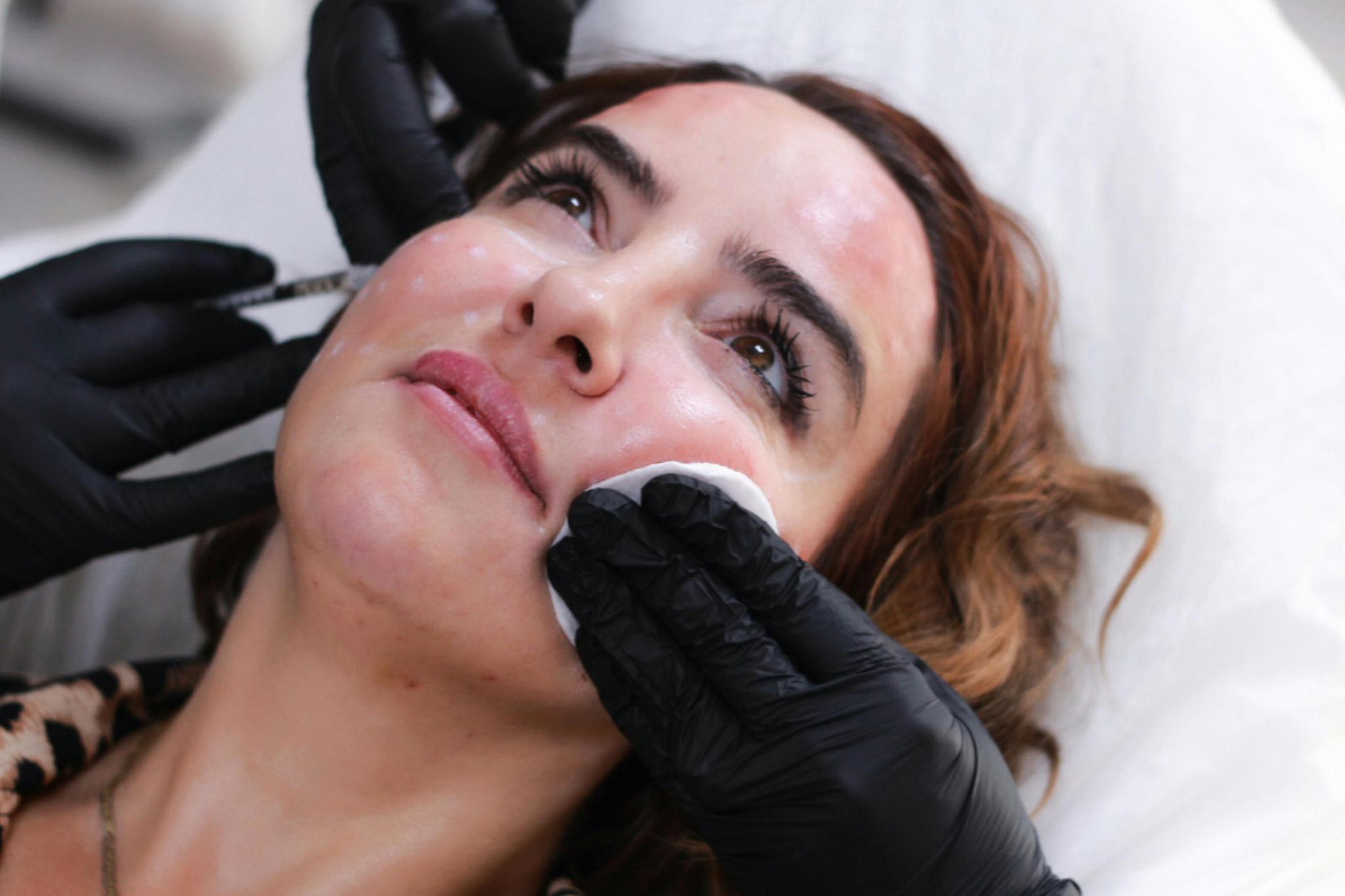
What is a Rejuran treatment?
A Rejuran treatment is an injectable procedure utilising polynucleotides (PN) aimed at supporting the natural repair processes within the skin.
Polynucleotides are DNA fragments used in aesthetic treatments to help support cell regeneration, tissue repair, and the production of collagen and elastin. This process may gradually improve the underlying structure of the skin.
Rejuran is commonly considered for:
Fine lines
Acne scars
Enlarged pores
Reduced skin elasticity
Dull skin
Skin ageing
Read more about Rejuran polynucleotides.
What are polynucleotides?
Polynucleotides are small DNA fragments used in regenerative aesthetic treatments. In Rejuran, they are injected into the skin to support processes involved in repair and renewal.
They are used to support:
Cell regeneration
Skin repair
Skin barrier support
Collagen production
Elastin production
This is why Rejuran is often regarded as a treatment that focuses on improving skin quality and supporting skin regeneration.
What does Rejuran do?
Rejuran aims to support natural skin renewal through biostimulation. The polynucleotides help stimulate fibroblasts, which are cells involved in collagen and elastin production.
This process may gradually improve the skin’s structure without adding artificial volume. Results are usually subtle and develop over time.
Rejuran may help with:
Improved skin quality
Enhanced hydration
Refined skin texture
Reduction of fine lines
Support for the skin barrier
Improvement in acne scarring
A more even skin texture
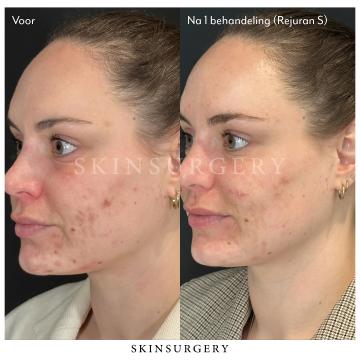
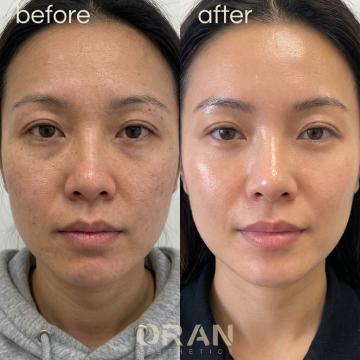
For visible result expectations, you can also view Rejuran before and after examples.
Which skin concerns can Rejuran address?
Rejuran may be considered for several skin-quality concerns. Suitability depends on your skin, treatment area and expectations.
Fine lines and early wrinkles
Rejuran is often used for early signs of skin ageing and superficial fine lines.
Acne scarring
By supporting tissue repair, Rejuran may help improve the appearance of certain types of acne scars.
Enlarged pores and uneven texture
As skin quality improves, pores and uneven texture may appear less noticeable.
Dull or tired-looking skin
Some people choose Rejuran when the skin looks dry, dull or less resilient.
Under-eye skin quality
Rejuran can be used carefully under the eyes for fine lines, thin skin and delicate texture concerns.
Read more about Rejuran under the eyes and Rejuran acne scars.
Who is a Rejuran treatment suitable for?
A Rejuran treatment may be suitable for people who want to improve skin quality without adding volume.
It may be considered if you:
want smoother, better hydrated skin
have fine lines or early signs of ageing
have certain acne scarring concerns
want a more even skin texture
want to support skin quality as it changes with age
do not want the volume effect of dermal fillers
A practitioner will assess your skin during a consultation and explain whether Rejuran is suitable for your concern, skin condition and goals.
Read more about Rejuran by age and Rejuran for men.
How does a Rejuran treatment work?
- 1 Consultation and skin assessment
- 2 Discussion of expectations
- 3 Preparation and numbing cream
- 4 Rejuran injections
- 5 Aftercare advice
- 6 Follow-up if needed
Does a Rejuran treatment hurt?
Most people find Rejuran manageable, although the treatment can feel uncomfortable because it involves multiple small injections across the treatment area.
Clinics often apply numbing cream before treatment to reduce discomfort. Sensitive areas, such as under the eyes, may still feel more tender than other parts of the face.
Any tenderness should gradually settle after treatment.
How many Rejuran treatments will I need?
A course of multiple Rejuran treatments is usually recommended. One session may not be enough to see a clear change, because the treatment works gradually.
The exact treatment plan depends on:
age
skin condition
treatment area
skin concern
previous treatments
desired level of improvement
After the initial course, maintenance treatments may be advised depending on how your skin responds.
Are two Rejuran sessions enough?
For some people, two sessions may give visible improvement. Others may need more sessions. Your practitioner should create a personalised plan based on your skin and expectations.
If you are unsure why the result is subtle, read more about Rejuran not working as expected.
When will I see results from Rejuran?
Rejuran results are not usually immediate. The skin first needs time to settle after the injections. Improvement then develops gradually as skin repair and collagen stimulation are supported.
Time after treatment | What you may notice |
|---|---|
First few days | Redness, swelling or small bumps may be visible |
Weeks 2 to 4 | Skin may begin to feel smoother and more hydrated |
Months 2 to 3 | Skin quality, texture and firmness may become more noticeable |
After a treatment course | Results may be clearer, depending on your skin and treatment plan |
Results vary from person to person. Your practitioner can explain what is realistic for your skin concern.
Want to know how long the effect may last? Read how long Rejuran lasts.
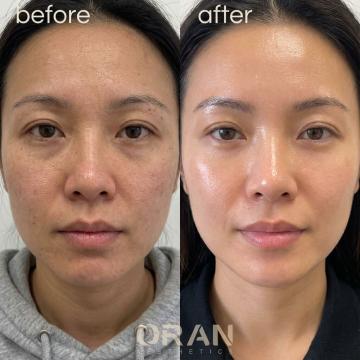
Before and after photos of Rejuran
Is Rejuran safe?
Rejuran is generally considered a safe treatment when performed by an experienced, qualified practitioner in a clinical environment. However, as with any injectable procedure, there are potential risks and side effects.
When is Rejuran not recommended?
Rejuran may not be suitable if you have:
an active skin infection
inflammation in the treatment area
certain medical conditions
known sensitivity to any ingredients
pregnancy or breastfeeding
a history of complications with injectable treatments
During a consultation, your practitioner should assess your medical history, skin condition and expectations before advising whether treatment is appropriate.
Possible side effects and aftercare
Most side effects associated with Rejuran are mild and temporary.
Common reactions at the injection sites include:
Redness
Swelling
Bruising
Tenderness
Small bumps at the injection sites
Read more about Rejuran side effects.
Aftercare advice
Following proper aftercare helps ensure a smooth recovery.
Practitioners typically advise that for the first 24 to 48 hours, you should:
Avoid intense exercise
Avoid saunas and steam rooms
Limit direct sun exposure
Do not massage the injection sites
Only apply make-up according to your practitioner's advice
Which areas can be treated?
Rejuran is mainly used in areas where skin quality, texture, hydration and elasticity are the main concerns.
Common treatment areas include:
face
cheeks
under-eye area
neck
décolletage
The right treatment area depends on your skin concern and whether Rejuran is the most suitable option.
Rejuran vs Profhilo vs Skinboosters
It can be useful to compare Rejuran with other injectable skin-quality treatments before deciding what fits your skin.
Feature | Rejuran | Profhilo |
Main active basis | Polynucleotides | Hyaluronic acid |
Main focus | Skin repair and regeneration | Hydration and elasticity |
Volume effect | No | No |
Skin repair focus | Stronger focus | Limited |
Common use | Skin quality, fine lines and acne scars | Hydration and laxity |
Result style | Gradual and subtle | Gradual hydration |
Rejuran is usually chosen for skin repair and texture concerns. Profhilo and skinboosters are more commonly chosen for hydration and skin glow.
Compare Rejuran vs Profhilo in more detail.
Compare Rejuran clinics in the UK
Are you considering a Rejuran treatment? It is important to find a reputable clinic and a qualified practitioner who understands your skin.
You can use Injectablesbooking to compare UK clinics, read patient reviews, and explore treatment options near you. Comparing clinics helps you get a better understanding of practitioner experience, treatment costs, and which clinic best aligns with your aesthetic goals.
Compare clinics in United Kingdom

- Rejuran from
- £ 295,00




Frequently asked questions about Rejuran Treatment
How is Rejuran different from skinboosters?
While skinboosters primarily focus on deeply hydrating the skin using hyaluronic acid, Rejuran uses polynucleotides to actively support skin repair, cellular regeneration, and texture improvement.
Can Rejuran be used under the eyes?
Yes, Rejuran is often carefully administered under the eyes to help improve the appearance of fine lines, thinning skin, and overall skin quality in that delicate area.
When should I consider starting Rejuran treatments?
This depends entirely on your skin condition. Many people consider Rejuran when they first begin to notice early signs of ageing, fine lines, or a general decline in skin texture and radiance.
What if I don't see results from Rejuran?
Results can vary based on individual skin condition, age, and lifestyle. If you are not seeing the expected improvements, it may be related to the number of sessions completed or your specific treatment plan. Always discuss your progress with your practitioner.
How long does a Rejuran treatment take?
Depending on the size of the area being treated, the actual injection process usually takes between 20 and 45 minutes.
Are there any immediate side effects?
It is normal to experience temporary redness, mild swelling, or small raised bumps at the injection sites. These typically subside within a few days.